Tone of voice is how we sound across every touchpoint.
A consistent voice builds recognition, trust, and clarity across markets and audiences.
Our voice should feel unmistakably Lenovo: smart, clear, confident, and human. Not arrogant. Not overly clever. Just smart.
Our brand voice
Our tone of voice is built on three core traits: purposeful, unexpected and brave.
These traits guide how we write, what we emphasize, and how we connect at every touchpoint.
Purposeful
We communicate with intention.
Every message should support a clear idea, meaningful outcome or human benefit. We focus on what matters most and avoid unnecessary complexity.
We sound

Clear
Focused
Relevant
Human-centered
Intentional
We avoid

Empty claims
Overexplaining
Generic marketing language
Bragging without substance
Trend participation without relevance
Purposeful writing principles
Use this approach
Lead with meaning, not mechanics
Technology matters most when people understand why it matters.
Technology matters most when people understand why it matters.
Compassion that crosses borders. Now that’s smarter.
Lenovo edge technology is helping doctors reach patients faster during emergencies.
Avoid this approach
Feature-heavy messaging without a clear human outcome.
Our edge servers enable real-time data processing in remote environments.
Have a clear point of view
Good writing has a strong core idea. Focus on what matters, why it matters and the outcome it creates.
Good writing has a strong core idea. Focus on what matters, why it matters and the outcome it creates.
We’ve always believed strength comes from inclusion — and we work to build that into our own company, too.
Vague positioning, empty claims, or broad category statements that could belong to any brand.
We’re committed to innovation, inclusivity and creating a better future for everyone.
Make every sentence earn its place
Strong writing is focused. Prioritize what matters most and cut anything that distracts from the core message.
Strong writing is focused. Prioritize what matters most and cut anything that distracts from the core message.
Say goodbye to Wi-Fi. Meet the world’s first 5G laptop.
Long explanations, unnecessary detail, or technical language that buries the message.
Our innovative connectivity solution leverages advanced 5G capabilities to help improve productivity and mobility across environments.
Unexpected
We don’t sound like everyone else.
Our communications should feel engaging, conversational and distinct — without trying too hard to be clever.
We sound
Conversational
Curious
Fresh
Inclusive
Thought-provoking
We avoid
Corporate clichés
Forced humor
Buzzword-heavy language
Generic tech marketing
Trend-chasing language that won’t translate globally
Unexpected writing principles
Use this approach
Write like you’re talking to a person
Use “you” and “we” naturally to create a more direct, human connection. Write as if you’re speaking to one person, not a room.
Use “you” and “we” naturally to create a more direct, human connection. Write as if you’re speaking to one person, not a room.
You’ve adapted to constant change. We’ve worked hard to do the same.
Avoid this approach
Overly formal, distant or robotic language.
Lenovo remains committed to supporting customers during periods of ongoing change and uncertainty.
Invite people into the conversation
Questions, observations and conversational phrasing can spark curiosity and pull people into the story.
Questions, observations and conversational phrasing can spark curiosity and pull people into the story.
Did you know hexagons are geometry’s powerlifters? On this episode of STEM At Home, we’re putting them to the test.
Questions that feel gimmicky, forced or never get answered.
Are you ready to experience the future of innovation?
Use wit thoughtfully
Humor can make writing feel more human when used thoughtfully. Keep it light, confident and natural — never distracting from the message.
Humor can make writing feel more human when used thoughtfully. Keep it light, confident and natural — never distracting from the message.
If you stare at our TrackPoint long enough, you’re officially meditating.
Forced, distracting or overly exaggerated humor
This workstation works harder than a squirrel on espresso.
Say familiar things in fresher ways
Unexpected writing avoids buzzwords, clichés and recycled marketing language. Look for phrasing that feels specific, human and relevant to the message.
Unexpected writing avoids buzzwords, clichés and recycled marketing language. Look for phrasing that feels specific, human and relevant to the message.
From coffee shops to kitchen tables, we’re helping people work from anywhere.
Overused phrases that could belong to any brand.
We’re raising the bar for smarter innovation.
Brave
We communicate with confidence, clarity, and a strong point of view.
We’re optimistic, direct and unafraid of straightforward language. We choose clarity over complexity.
We sound
Confident
Direct
Clear-headed
Decisive
Optimistic
We avoid
Fluff
Passive language
Overly technical language
Overcomplicated messaging
Overdramatic claims
Brave writing principles
Use this approach
Prefer clarity over sophistication
Strong writing is easy to understand. Choose simple, direct language over wording that feels overly polished, technical or complex.
Strong writing is easy to understand. Choose simple, direct language over wording that feels overly polished, technical or complex.
We’re helping businesses protect data, build trust, and make technology more accessible.
Avoid this approach
Language that sounds impressive but says very little.
Lenovo is leveraging transformative innovation frameworks to drive next-generation trust-centric digital ecosystem advancement.
Use active language
Strong verbs create momentum and clarity. Active writing feels more confident, direct and easy to understand.
Strong verbs create momentum and clarity. Active writing feels more confident, direct and easy to understand.
Lenovo helps seniors stay connected through gaming.
Passive construction or wordplay that makes the audience work too hard.
Connections between seniors are being supported through gaming-enabled experiences.
Communicate with conviction
Have a point of view and express it clearly. Strong writing sounds confident without overexplaining or hedging.
Have a point of view and express it clearly. Strong writing sounds confident without overexplaining or hedging.
Technology should work for more people — not just more experts.
Hedging, overqualifying, or hiding behind corporate language.
Lenovo aims to support broader accessibility outcomes where possible.
Be thoughtful about context
Confidence should never come at the expense of empathy or awareness. Strong writing considers the audience, context, and the real-world impact of the message.
Confidence should never come at the expense of empathy or awareness. Strong writing considers the audience, context, and the real-world impact of the message.
When discussing topics like accessibility, inclusion, sustainability or digital trust, focus on meaningful action and human outcomes.
Lenovo is helping expand access to technology and digital education in underserved communities.
Performative, overly self-congratulatory or politically charged language.
We’re leading the movement to redefine social responsibility through revolutionary, purpose-driven innovation.
Punctuation and formattting
Voice isn’t just about word choice.
Structure, rhythm, and punctuation shape how our writing feels.
General guidance
- Use contractions to sound natural and conversational
- Use sentence case for headlines and body copy
- Use punctuation intentionally
- Use periods in headlines when appropriate
- Prioritize clarity over stylistic rules
Sentence structure
- Write in a way that feels natural and conversational.
- Vary sentence length for pacing and emphasis
- Break up dense paragraphs
- Keep copy approachable and easy to follow
Adapting for different audiences
Our voice should stay recognizable, but it doesn’t need to sound the same everywhere.
Just as you’d speak differently to a friend than you would in a boardroom, different communications require different emphasis.
| Audience | Guidance |
| Social media | More conversational, energetic and playful |
| Executive or stakeholder communications | More direct, focused and insight-driven |
| Technical audiences | Clear and precise without unnecessary jargon |
| Recruiting | Human, optimistic and welcoming |
| Press releases | More formal while remaining approachable |
Not every piece of communication needs every voice tactic. Choose the approaches most appropriate for the audience and context.
Point of view
How we refer to ourselves and our audience shapes the tone, clarity, and connection of our writing.
First and second person
Using “we” and “you” helps create a direct connection with the audience.
We built this device to help you work wherever inspiration strikes.
Third person
Third-person writing is more formal and best reserved for:
- Press releases
- Stakeholder reports
- Legal or regulatory communications
The device was designed to support productivity in a range of work environments.
Inclusive language
Inclusive writing helps our communications feel welcoming, respectful and accessible to more people.
Practices to follow
Practices to avoid
Use gender-neutral language where possible
Respect and use people’s correct pronouns
Use people-first descriptions when appropriate
Use clear, accessible formatting and language
Break up dense blocks of text for readability
Stereotypes or broad assumptions
Patronizing or exclusionary language
Casual misuse of disability-related terms
Overly culturally specific references that may not translate globally
Excessive all caps or difficult-to-read formatting
Before and after examples
These examples show how stronger writing becomes clearer, more human, and more aligned with our tone of voice principles.
Before

After

Why it works
The revised headline focuses on the human outcome instead of the technology itself. It also sounds more conversational and inclusive.
Before
After

Why it works
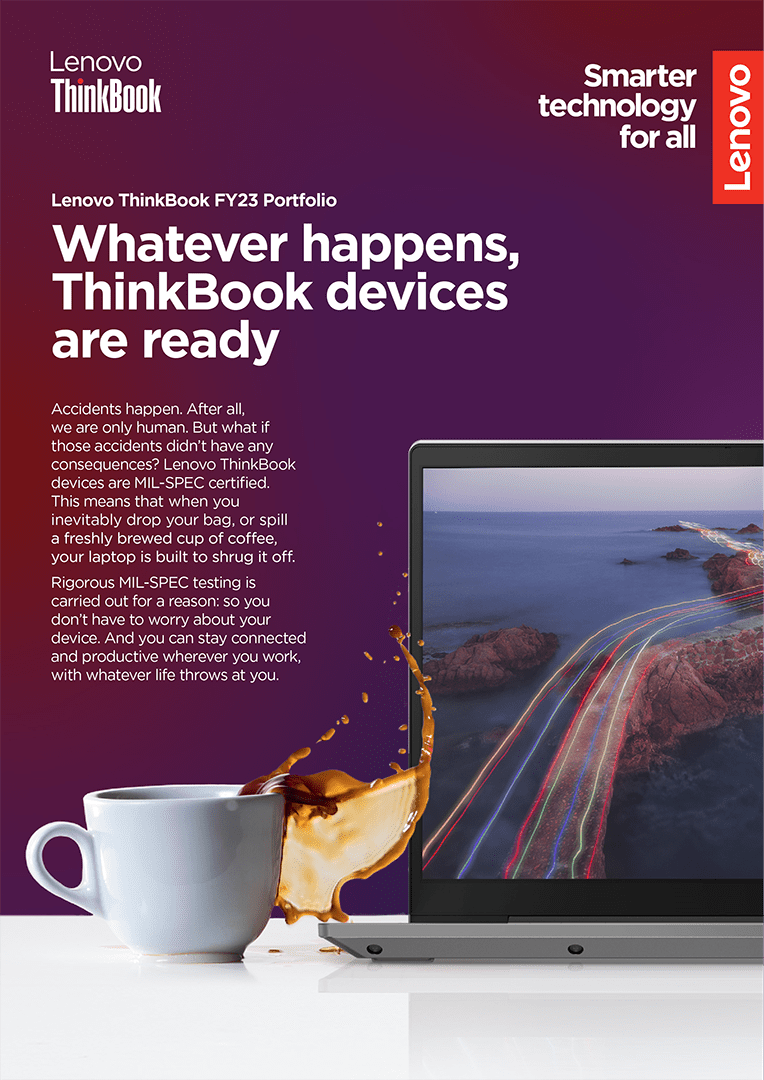
The revised headline feels more conversational and memorable while reinforcing durability.
Final reminders
Write clearly before writing cleverly
Focus on people, not just products
Say something meaningful, not just marketable
Use personality thoughtfully
Cut jargon where you can
Keep it clear, human and confident
Make it useful. Make it Lenovo
